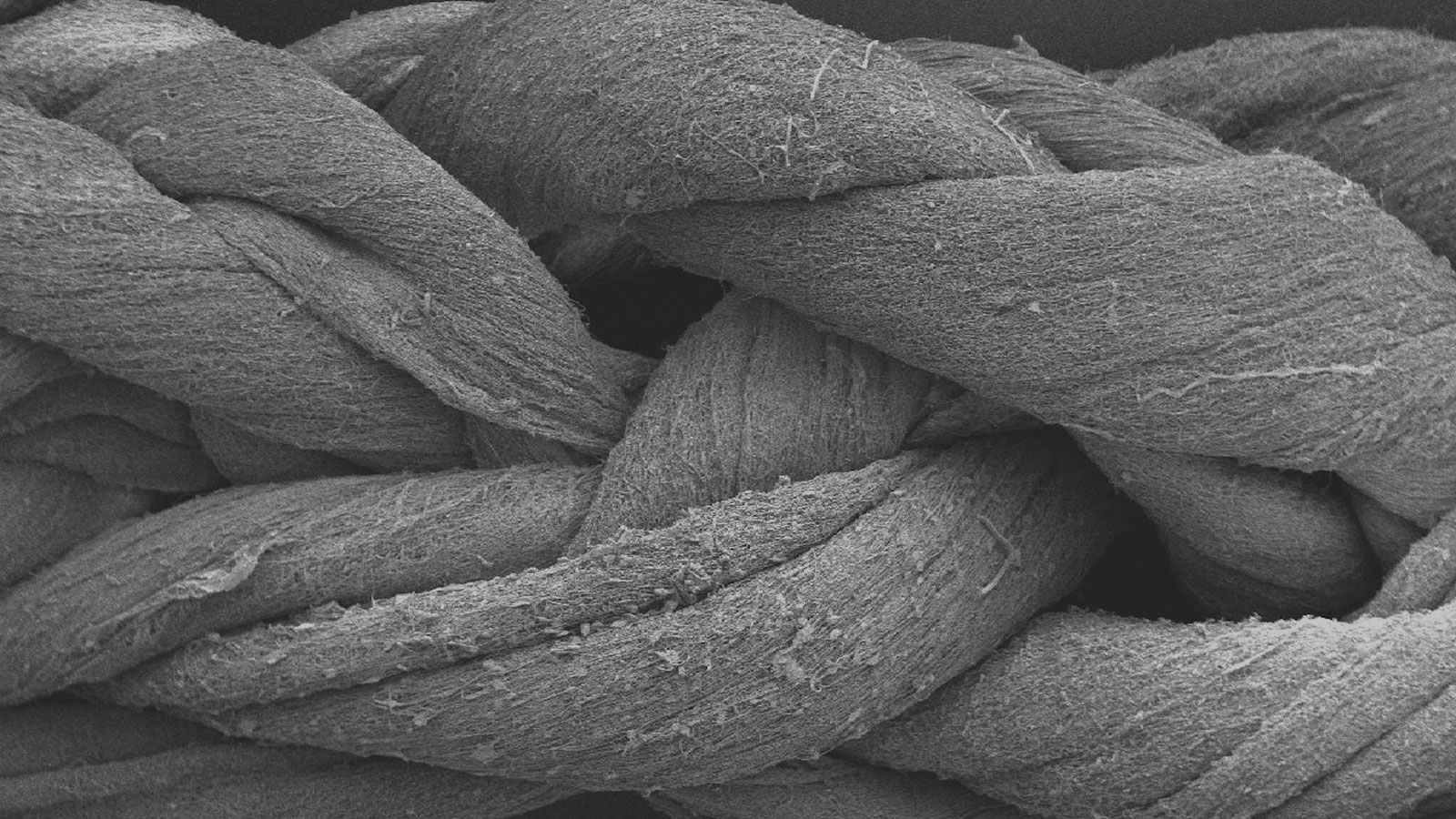


Australian company Maverick Bio worked with researchers and facilities at the Henry Royce Institute at the University of Manchester to develop an innovative new biomaterial that closely mimics tissue within the human body, enabling cutting-edge research into regenerative therapies.
Background and context
Regenerative therapies are treatments that help the body repair, regrow or replace damaged or destroyed tissues and organs. Despite remarkable advances, the clinical translation of regenerative therapies remains constrained by the lack of materials designed to behave like real human tissues. As advanced in vitro models become increasingly important for drug discovery, disease modelling and tissue engineering, researchers require biomaterials that closely mimic tissue within the human body, but that also consistently deliver the same results and can be easily used within modern medical experimentation and manufacturing systems.
Collagen-based hydrogels are widely regarded as the gold standard environment for testing and developing regenerative therapies. Yet existing commercially available collagen hydrogels required researchers to compromise between biological functionality, printability, structural stability, and experimental reproducibility.
This project sought to overcome these limitations by developing a collagen biomaterial that more closely recapitulates the biochemical and mechanical characteristics of tissues within the human body while remaining suitable for scalable manufacture and biofabrication.
To achieve this, Maverick Bio partnered with the Henry Royce Institute to develop Kraken Collagen Hydrogel. The collaboration combined Maverick Bio’s expertise in animal derived tissues and product development with the Henry Royce Institute’s specialist facilities and expertise in biomaterials, biofabrication and cell culture, accelerating the development and commercialisation of this new product.
Project Details and Results
Using specialist equipment in the Royce Hub, researchers from the University of Manchester and Maverick Bio worked together to develop Kraken Collagen Hydrogel.
Development centred on optimising collagen purity, processing conditions, and formulation characteristics to create a hydrogel that delivers both biological performance and manufacturing consistency. The team wanted to create a product that was structurally stable, could be 3D printed and would provide a safe and consistent environment for growing cells.
Testing demonstrated that the product performed very well both in its adaptability and in its ability to support and promote the growth of cells. After 96 hours, connective tissue cells cultured in the new Kraken Collagen Hydrogel showed significantly more growth than those cultured in an existing market-leading product.
Alongside product development, the project established scalable manufacturing processes underpinned by comprehensive quality controls to ensure batch-to-batch reproducibility and provide researchers with confidence in experimental consistency. This integrated approach accelerated the successful development and commercial launch of Kraken Collagen Hydrogel, the inaugural product within the Kraken Regen Collagen platform, creating a foundation for future innovation in regenerative medicine, organoid engineering and tissue engineering.
Impact & Next Steps
The collaboration between Maverick Bio and the Henry Royce Institute exemplifies the value of industry-academia partnerships in accelerating technology translation and commercialisation.
By combining specialist research infrastructure and scientific expertise with industrial product development, manufacturing capability and commercialisation, the partnership reduced development risk and accelerated innovation. Through the Henry Royce Institute, Maverick Bio accessed expertise in bioink development alongside state-of-the-art facilities for biomaterials characterisation, including rheological analysis, biofabrication, advanced cell culture, bioimaging and molecular characterisation. These capabilities enabled the systematic optimisation and validation of Kraken Collagen Hydrogel, accelerating its translation from development to commercial launch.
For Maverick Bio, the project establishes the foundation for the technology platform, enabling future development of specialised formulations tailored to emerging applications including vascularised tissues, organ-on-chip systems, translational biofabrication, and clinically relevant regenerative medicine research.
Future work will expand the platform through application-specific collagen formulations, enhanced biofabrication performance and continued collaboration with academic and industrial partners to accelerate next-generation tissue engineering technologies.
Project collaborators
The project brought together the complementary expertise of Maverick Bio and the Henry Royce Institute to develop a next-generation collagen biomaterial for regenerative medicine. Maverick Bio contributed expertise in animal tissue sourcing, product optimisation, manufacturing and commercialisation.
The Henry Royce Institute, through Dr Marco Domingos’ research group, contributed expertise in biofabrication, advanced biomaterials development, bioink design and bioprinting technologies for engineering physiologically relevant three-dimensional tissue models. The collaboration also provided access to specialist facilities for biomaterials characterisation, biofabrication and in vitro biological evaluation, enabling rapid optimisation and validation of Kraken Collagen Hydrogel.
By combining academic expertise with industrial product development, the partnership accelerated the translation of an innovative collagen biomaterial from concept to commercial launch.
Collaborators
Australian company Maverick Bio worked with researchers and facilities at the Henry Royce Institute to develop an innovative new biomaterial that closely mimics tissue within the human body, enabling cutting-edge research into regenerative therapies.
"This collaboration demonstrates how combining academic expertise, national research infrastructure and industrial innovation can accelerate the development of advanced biomaterials. By bringing together biofabrication, biomaterials science and commercial product development, we’ve created a platform that will support more physiologically relevant research and help advance the future of regenerative medicine."
Vanessa Worsfold
Chief Commercialisation Officer, Maverick Bio