

Royce Partner the United Kingdom National Nuclear Laboratory (UKNNL) is supporting the next generation of nuclear scientists by enabling researchers to access world-leading facilities and expertise.
UKNNL provides opportunities to advance knowledge critical to the UK’s long-term nuclear strategy by providing access to all three of their active facilities (Windscale Active Handling Facility (AHF), Central and Preston Laboratories) for researchers to work directly with irradiated materials.
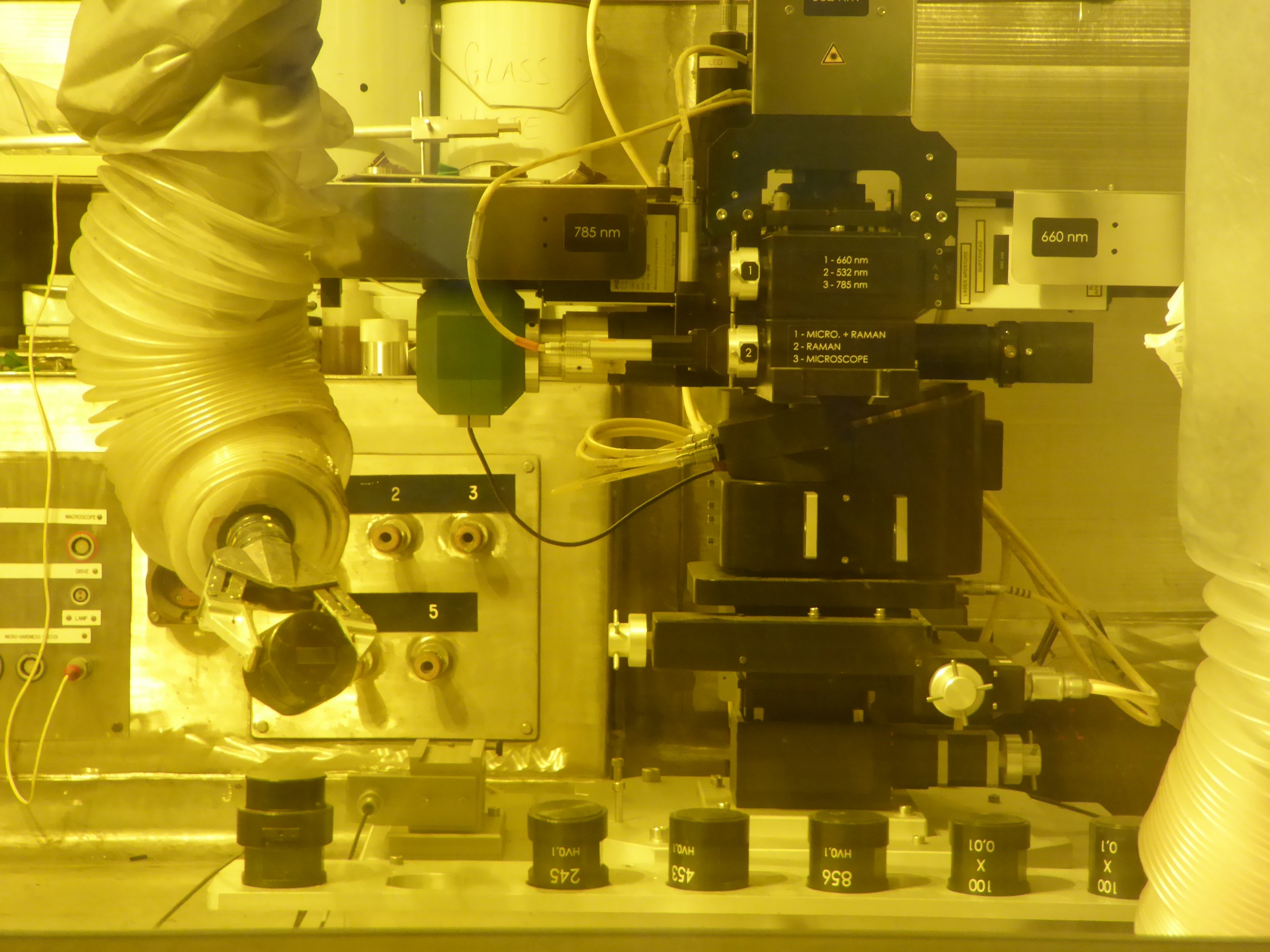
At the centre of this capability is a Royce-funded, in-cave triple-wavelength Raman microscope with integrated microhardness testing, commissioned in 2025. Located within a shielded high active cell at Windscale AHF, the instrument enables detailed characterisation of highly radioactive materials in an operational nuclear environment.
Recent work at the facility has brought this capability into academic use for the first time, with George Livesey, a PhD researcher at The University of Manchester, leading the way. His work focuses on corrosion processes in advanced gas-cooled reactor (AGR) fuel cladding and is supported through an EPSRC Industrial CASE (I-CASE) studentship sponsored by UKNNL via the Centre for Innovative Nuclear Decommissioning (CINDe).
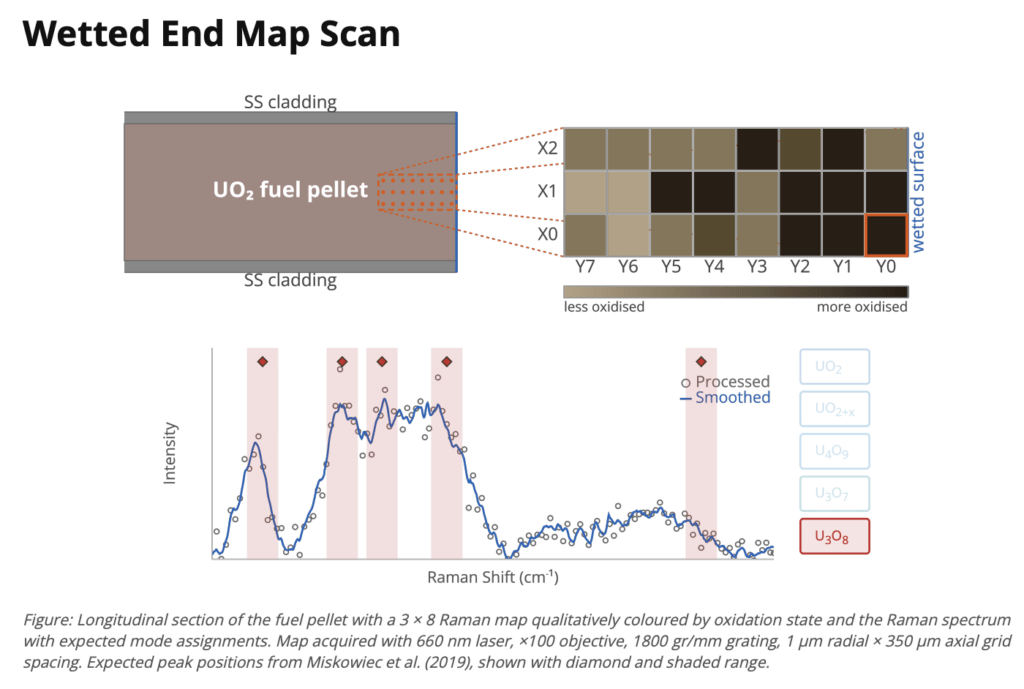
By applying Raman spectroscopy to irradiated ex-service AGR fuel, George’s research aims to identify chemical signatures associated with degradation. These insights will help improve predictions of long-term fuel performance, while supporting decommissioning strategies and nuclear waste management.
Through such structured access, UKNNL supports researchers in safely working within active nuclear facilities, including specialist training, experimental planning and technical guidance.
Phase one of this work has demonstrated the capability of the Windscale Raman system to generate high-quality datasets from irradiated fuel materials. The results are currently being analysed, and George will undertake a future placement phase to undertake further measurements to better understand corrosion mechanisms at the microscale.
Reflecting on the experience, George Livesey said:
“It was genuinely valuable to see how work is carried out in an active environment. Watching the process gave me a much clearer sense of how to interpret my own results and where to take my research next, and the explanations and discussion were helpful in shaping my thinking. I’m looking forward to applying what I learned and seeing whether some of the ideas I’ve had will bear fruit.”
Next Steps
Future phases of George’s research will expand to include wetted uranium dioxide (UO₂) AGR fuel pellets at varying burn-up levels. Methodologies for data acquisition and analysis will also be refined, helping to establish new approaches for characterising irradiated materials.
By enabling PhD researchers to engage directly with complex nuclear materials and operational environments, UKNNL is strengthening UK research capability in areas critical to energy security, decommissioning and environmental stewardship.
The ongoing collaboration between UKNNL, The University of Manchester, the Henry Royce Institute, EPSRC and CINDe demonstrates how coordinated investment in facilities and people can accelerate innovation in nuclear materials science.
Find out more about Royce’s Nuclear Materials research area here.