

Researchers at Royce Partner Imperial College London have released a new open-access battery dataset that demonstrates how high-quality, machine-readable data can accelerate scientific discovery and support the next generation of AI-enabled materials research.
The Discovery Benchmark dataset developed through DIGIBAT shared open access research facility at Imperial College London, has been made publicly available through Zenodo with support from the Henry Royce Institute and UK Research and Innovation (UKRI), funded via the Department for Science, Innovation and Technology (DSIT).
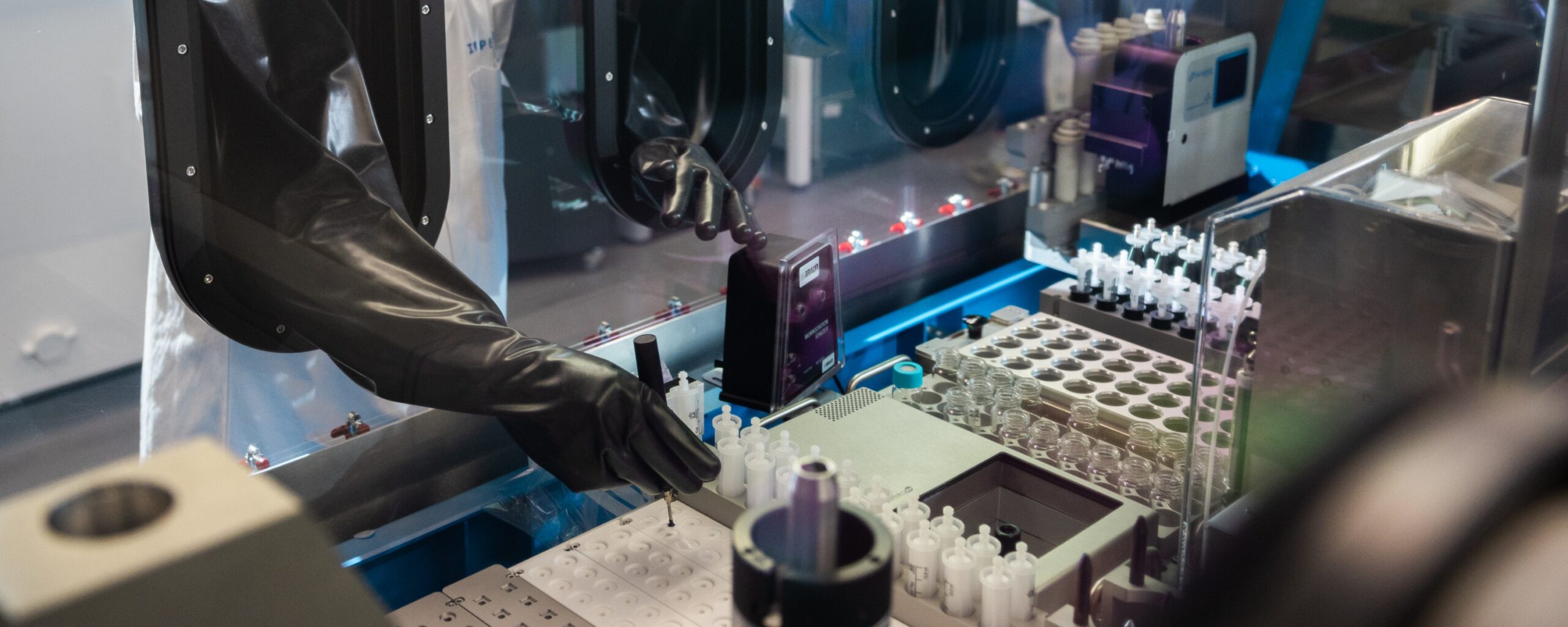
Comprising approximately 250 lithium-ion coin cells, the dataset was generated using DIGIBAT’s automated battery assembly robotics. As well as being a valuable resource for battery researchers the initiative provides a practical demonstration of how automated experimentation can be connected across the research lifecycle to accelerate discovery.
The release of the dataset aligns closely with the ambitions set out in the UK Government’s AI for Science Strategy, which recognises that the transformative potential of AI in research depends on access to trusted, interoperable and high-quality datasets.
Importantly, the work also exemplifies the vision outlined in Royce’s National Framework for Materials 4.0 which calls for a transformation in how materials research data are generated, managed and shared. The report advocates the integration of automation, digital technologies and common standards to strengthen the UK’s materials innovation capability.
By demonstrating how data can flow directly from automated equipment into structured databases and ultimately be accessed by AI systems the DIGIBAT programme offers a very strong example of Materials 4.0 in practice.
Professor Ian Kinloch, Royce Chief Scientific Officer said:
“The Discovery Benchmark dataset is an excellent example of the kind of integrated, digitally enabled research environment that the UK needs to realise the full potential of AI in science.
“The brilliant DIGIBAT team has created not only a valuable resource for battery researchers but a blueprint for how Materials 4.0 can be delivered in practice. This work demonstrates the power of bringing together expertise across materials science, data engineering and digital technologies.”
Prof. Magdalena Titirici from the Imperial Team said:
“This dataset itself embodies the principles needed to realise the UK’s ambitions for AI-enabled science – experimental reproducibility, interoperable metadata and open access.
“By making these data available, the DIGIBAT team is helping to establish the trusted digital foundations that will enable researchers to harness artificial intelligence responsibly and effectively in the search for better energy materials.”
Interoperability
To ensure seamless future reuse the team has provided a version annotated using the BattINFO ontology, enabling relationships between cells, components and experimental processes to be formally defined and understood by both researchers and machines.
The dataset also links information across multiple stages of battery development. Precursor-level characterisation data, including scanning and transmission electron microscopy (SEM/TEM), X-ray diffraction (XRD) and X-ray photoelectron spectroscopy (XPS), are mapped directly to individual electrode records. Operational testing outputs including Neware cycling data and BioLogic cyclic voltammetry and electrochemical impedance spectroscopy measurements, are connected to the corresponding cell entries.
This integrated approach allows researchers to trace a complete experimental pathway from materials synthesis and characterisation through to device fabrication and electrochemical performance.
The achievement was made possible through a multidisciplinary collaboration spanning battery science, automation, data engineering and ontology development.
Robert Hunter and Niamh Hartley prepared and tested the batteries. Matthew Evans and Ben Smith of datalab industries ltd. developed the data ingestion workflows. Lucas Garcia Verga designed the data architecture and pipelines, while Felix Mildner led the BattINFO annotation and created DigiBOT. Shirley Xiong developed CellSeer, and Jingyu Feng supported the automation activities and helped bridge the different teams involved throughout the project.
The team also acknowledges the leadership of Magdalena Titirici, Aron Walsh and Sam Cooper for providing the vision, resources and motivation that enabled the initiative to succeed.
You can watch a video about the project here.
About DIGIBAT
The DIGIBAT facility was funded through an EPSRC strategic equipment grant, led by Magdalena Titirici, Sam Cooper, Ifan Stephens, Aron Walsh, Mary Ryan, Becky Greenaway and Gregory Offer, and hosted by Department of Chemical Engineering at Imperial College London. The facility warmly welcomes collaborations and projects with academic groups and industry partners.
Website: www.imperial.ac.uk/digibat Contact: digibat@imperial.ac.uk