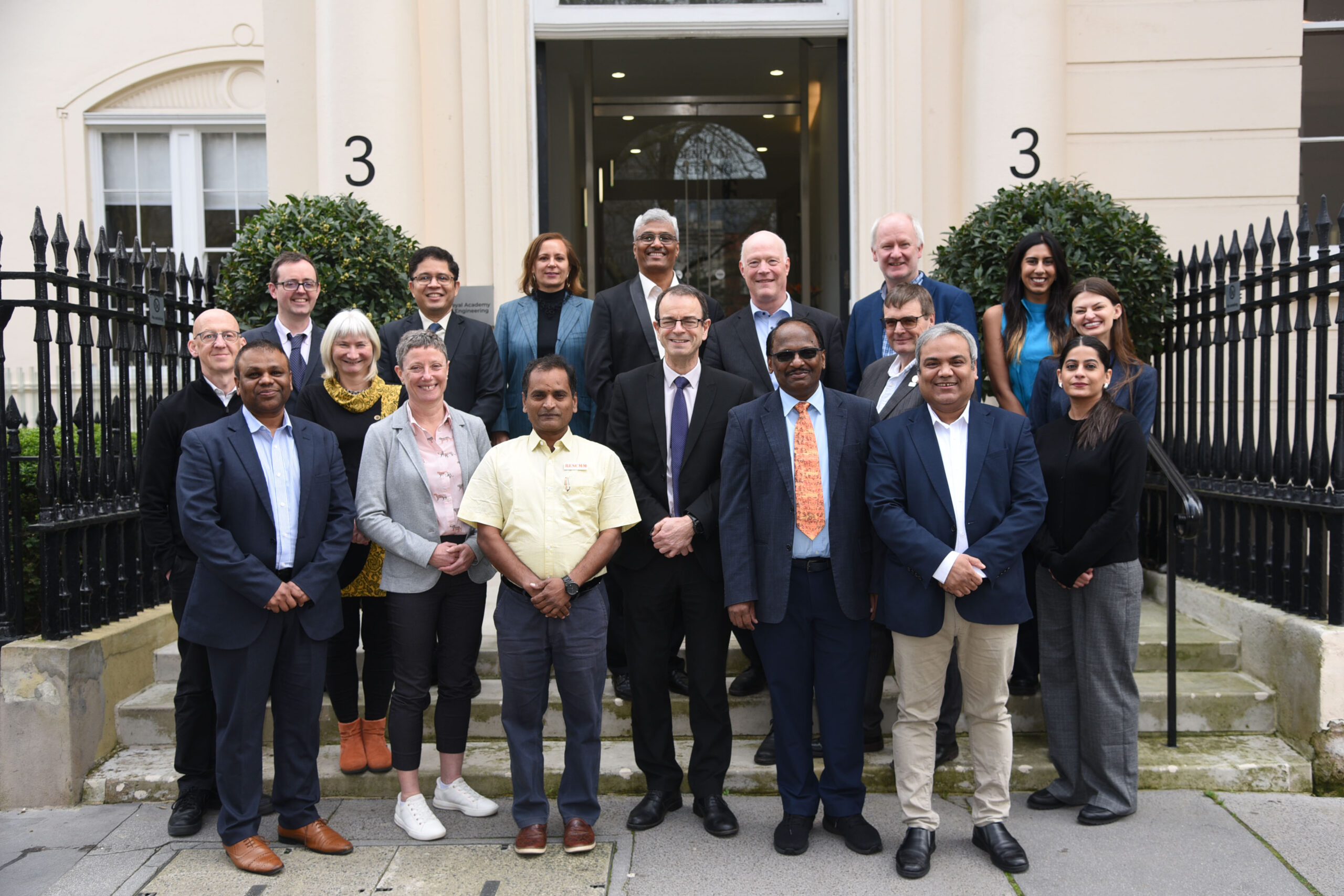


Senior materials and engineering leaders from the UK and India came together in March for a high-level joint forum focused on the materials and critical minerals needed to power the global energy transition.
Organised by the Royal Academy of Engineering (RAEng) and the Indian National Academy of Engineering (INAE), the London forum brought together experts from both nations to align strategy, accelerate innovation and strengthen cooperation on sustainable materials systems.
Originally planned as an in-person gathering, the event moved to a hybrid format due to international travel disruption, but still delivered a series of strategic outcomes designed to support long-term UK–India collaboration.
The forum was chaired by Professor David Knowles, CEO of the Henry Royce Institute and a Fellow of the Royal Academy of Engineering.
Key areas identified for follow-up included:
- Pooling scale-up capabilities to enable shared use of infrastructure and accelerate the journey from laboratory breakthroughs to industrial deployment.
- Challenge-led innovation sprints to rapidly seed and test new technological solutions.
- Materials passports and big data, advancing “Material 4.0” approaches that improve digital traceability and support sustainable, transparent supply chains.
- National strategic alignment, ensuring bilateral activity supports wider UK priorities around resource efficiency, circularity and net-zero ambitions, including alignment with the UK’s National Materials Innovation Strategy.
Professor David Knowles said:
“Despite the challenges of having to change the set-up to hybrid owing to the cancellation of flights through the Middle East, we had some fantastic discussions, presentations and panels covering topics from sustainable and traceable critical mineral supply chains through to reducing dependency on scarce materials.
“There will be actions to follow, but clear priorities came to the fore around pooling scale-up capabilities, stimulating challenge-led sprint activities to seed innovation, skills and people, big data, and materials passports.
“It was also clear how these challenges span the full life cycle for materials, strongly overlapping with the UK National Materials Innovation Strategy.”
He also thanked the organising teams at RAEng and INAE for delivering a fantastic event despite the travel disruption.